Meet the ASU engineering students researching implants, cybersecurity and more

Saurav Kumar (left), an assistant professor of civil, environmental and sustainable engineering in the Ira A. Fulton Schools of Engineering at Arizona State University, and Ahadu Assegued use a spectrometer to measure environmental data. Assegued, a Fulton Schools aerospace engineering undergraduate student, is one of many Fulton Undergraduate Research Initiative, or FURI, students participating in the Fall 2025 Fulton Forge Student Research Expo. Photo by Erika Gronek/ASU
Building better orthopedic implant coatings, automating cybersecurity tasks and affordably analyzing soil and water quality are just some of the ways Arizona State University students are addressing practical challenges through hands-on research.
Undergraduate and graduate students in the Ira A. Fulton Schools of Engineering at ASU have several opportunities to conduct research that has real-world impact.
Through individual projects mentored by Fulton Schools faculty members, students apply their classroom knowledge, build new skills and forge meaningful advances in the research themes of data science, education, energy, health, security, semiconductor manufacturing and sustainability.
In the Fulton Undergraduate Research Initiative, also known as FURI, and the Master’s Opportunity for Research in Engineering, or MORE, programs, participants conceptualize ideas, develop plans and investigate research questions during a semester.
Students participating in the Grand Challenges Scholars Program, or GCSP, can apply for additional funding to conduct research through the GCSP research stipend program. Conducting research is one part of the rigorous GCSP competency requirements to prepare students to solve complex societal challenges.
These three programs enhance students’ ability to innovate, think independently and solve problems in their communities. They also benefit from the technical and soft skills they gain, which prepare them for their careers and the pursuit of advanced degrees.
Each semester, students who participate in FURI, MORE and the GCSP research stipend program are invited to present their findings at the Fulton Forge Student Research Expo.
Meet three of the research participants highlighted below and more than 100 other student investigators at the fall 2025 expo, which is open to the public, on Tuesday, Nov. 18, from 1 to 3 p.m. in the Memorial Union on the ASU Tempe campus.
Munia Ahmed

As a GCSP student, biomedical engineering major Munia Ahmed got involved in the research stipend program to deepen her experience in research. Working with Vincent Pizziconi, a Fulton Schools associate professor of biomedical engineering, Ahmed is investigating how well a special type of gel formulation for orthopedic implant coatings ages during use.
Question: What made you want to get involved in this program? Why did you choose the project you’re working on?
Answer: I wanted to get involved in the GCSP research stipend program because it offers an incredible opportunity to pursue research with the support and resources necessary to explore meaningful questions. I chose my current project because of my strong passion for regenerative medicine and biomaterials research, and being part of the Laboratory of BioInspired Complex Adaptive Systems at ASU has continually fueled my motivation and deepened my commitment to this field.
Q: How do you see this experience helping with your career or advanced degree goals?
A: I see this experience as an important step in preparing for graduate school and advancing my research career. I am strengthening my ability to think critically about scientific problems, design experiments and independently carry out a research project from start to finish. Working in regenerative medicine and tissue engineering also allowed me to explore different research areas that I can pursue as a biomedical engineering major and helped me build a strong technical foundation.
Ahadu Assegued

Ahadu Assegued, a Fulton Schools aerospace engineering undergraduate student, got involved in FURI to gain experience working in sustainability research. Working with Saurav Kumar, an assistant professor of civil, environmental and sustainable engineering in the Fulton Schools, Assegued is exploring a new method to affordably assess water and soil quality.
Question: What made you want to get involved in this program? Why did you choose the project you’re working on?
Answer: I wanted to get hands-on experience by doing research in a lab. I chose this project because it focuses on sustainability, and it allows me to get the research experience I want by working on a theme I’m passionate about.
Q: How will your engineering research project impact the world?
A: The purpose of my project is to make water and soil quality assessment more affordable by using low-cost spectrometers. This data could then be used to calibrate Earth observation satellites, which monitor our environment, to make them more accurate.
Sameera Shah

Sameera Shah, a Fulton Schools computer science undergraduate student, chose to participate in FURI to gain more research experience while working in an area beyond her expertise. Now under the mentorship of Stephanie Forrest, a Fulton Schools professor of computer science and engineering and director of the ASU Biodesign Center for Biocomputing, Security and Society, Shah is exploring the use of automated error correction in software code.
Question: What made you want to get involved in this program? Why did you choose the project you’re working on?
Answer: I was part of the Biocomputing Scholars Program and had already become familiar with (Dr. Forrest’s) project over the past couple of months. I decided to apply to FURI because I wanted to dive deeper into research and get more hands-on experience. I chose this project specifically because it’s in a domain I hadn’t worked in before, and I was excited about the opportunity to learn something completely new.
Q: How will your engineering research project impact the world?
A: This work can have a significant impact by making software development more reliable and efficient. By automating the detection of bugs, it can reduce human error, save developers valuable time and improve the overall quality of software. In critical systems, faster and more accurate bug fixes can lower costs and ensure that technology works as intended for users everywhere.
More Science and technology

New research by ASU paleoanthropologists: 2 ancient human ancestors were neighbors
In 2009, scientists found eight bones from the foot of an ancient human ancestor within layers of million-year-old sediment in the Afar Rift in Ethiopia. The team, led by Arizona State University…

When facts aren’t enough
In the age of viral headlines and endless scrolling, misinformation travels faster than the truth. Even careful readers can be swayed by stories that sound factual but twist logic in subtle ways that…
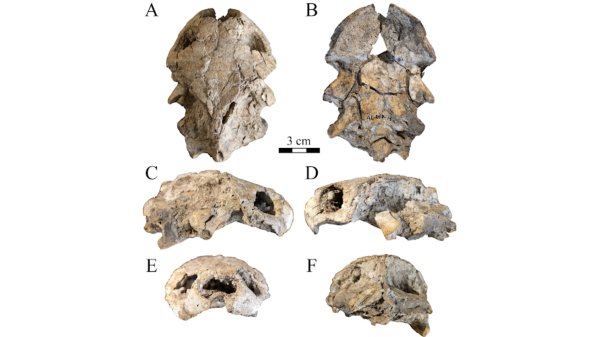
Scientists discover new turtle that lived alongside 'Lucy' species
Shell pieces and a rare skull of a 3-million-year-old freshwater turtle are providing scientists at Arizona State University with new insight into what the environment was like when Australopithecus…